Understand the stages of early childhood numeracy skills from the concrete to the abstract phase. Optimize your child’s numeracy through personalized private lessons at Edumaster!
How do children’s numeracy skills develop based on their age phase?
Edumaster understands that children’s developing numeracy skills go through three main phases, namely the quantity introduction phase (0-3 years), the number transition phase (3-5 years), and the simple operations phase (5-6 years).
Each age range requires different methods of stimulation, so that children remain comfortable while learning.
Ages 0–3 Years: Initial Phase of Understanding Simple Quantity Concepts and Daily Patterns
In this phase, children have actually begun to absorb the basic concepts of counting, even though they cannot yet pronounce a single word.
Your little one’s brain is actively capturing patterns and quantities from the surrounding environment.
The best stimulation in this phase is through daily routines such as counting fingers while showering, or saying numbers when climbing stairs.

Early childhood numeracy development at this level is more of a sensory experience, not rote memorization.
Age 3–5 Years: Transition Period for Counting Sequentially to Recognizing Number Symbols
Entering this age, children begin to be interested in counting objects around them concretely.
Children are starting to be able to pronounce the sequence of numbers one to ten verbally, although sometimes they still jump.
They also began to relate written number symbols to the number of real objects in front of them.
By the age of 5, children begin to be able to associate number symbols (such as “3”) with the number of real objects.
This is where the basic mathematical concepts of kindergarten children begin to form cognitively.
Ages 5–6 Years: Readiness to Sort Patterns and Do Simple Additions
In this phase, your little one is ready to understand the basic concepts of kindergarten mathematics.
They can already answer questions like “which one has more?” or perform additions with the help of physical objects.
Readiness to read patterns and group objects is a sign that a child is ready to enter more structured mathematical concepts.
A glance at Private Edumaster
Private Edumaster is present as an institution providing private home and online tutoring services that focuses on personalizing learning, reaching the Jabodetabek, Surabaya, Bandung and other big cities.
The Edumaster team combines national and international curriculum options into an adaptive and interactive teaching method.
We are committed to helping every child find their best learning style so that their academic potential is optimal.
With a network of professional teachers, we are ready to accompany children’s school curriculum, especially for private mathematics tutoring services nearby from an early age.
Why is Piaget’s Theory so Important in Guiding Children’s Mathematics Learning Phase?
Based on Piaget’s theory, children’s cognition is formed independently through active involvement and a reciprocal relationship between themselves and the environment in which they grow.
This theory shows fundamental differences between the cognitive development of children and adults.
Based on this, learning mathematical concepts should start from the concrete, according to the child’s numeracy stage, not immediately abstract.
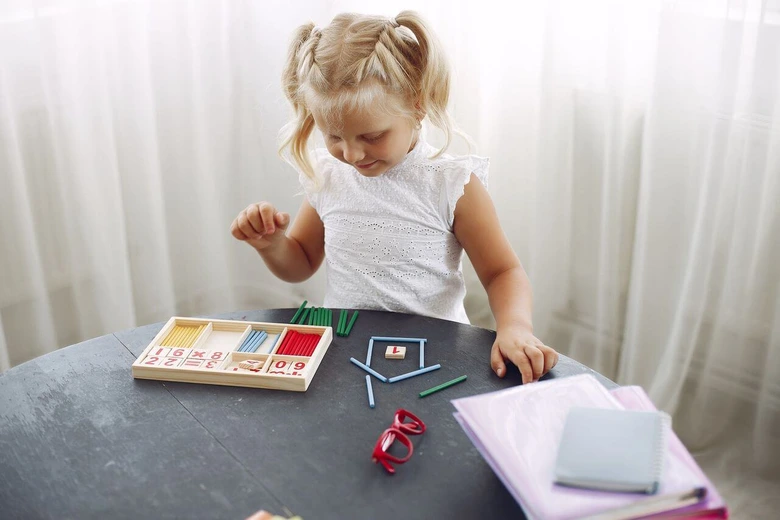
Start Learning from the Concept Stage Using Real Objects that Can Be Touched
Piaget emphasized that early childhood is at a very concrete pre-operational stage of development.
This means they have to touch three real apples before they can understand the symbol for the number “3” on the paper.
Bridging Children’s Logical Understanding Through the Transition Stage and Number Symbol Stage
After the concrete phase matures, children will be guided slowly towards the semi-concrete stage in the form of pictures.
Once children master it, abstract number symbols such as plus and minus symbols can begin to be introduced by teachers and parents.
What are the basic concepts of early childhood mathematics that must be mastered apart from memorizing numbers?
Understanding basic mathematical concepts in early childhood is based on six main principles, namely numbers, patterns, shapes and space, classification, measurement and organizing data.
The use of appropriate teaching media really helps ease the teacher’s task of instilling mathematical understanding in young children.
Object Classification Ability and Basic Geometry Recognition
Object Classification is the ability to group objects based on color, shape, or size.
This trains the logic of categorization which will later become the basis for understanding sets in mathematics.
Introduction to basic geometry such as circles, triangles and squares, which also develops spatial skills that are important for the next level of mathematics.
Simple activities such as sorting toys by color are effective geometric stimulation.
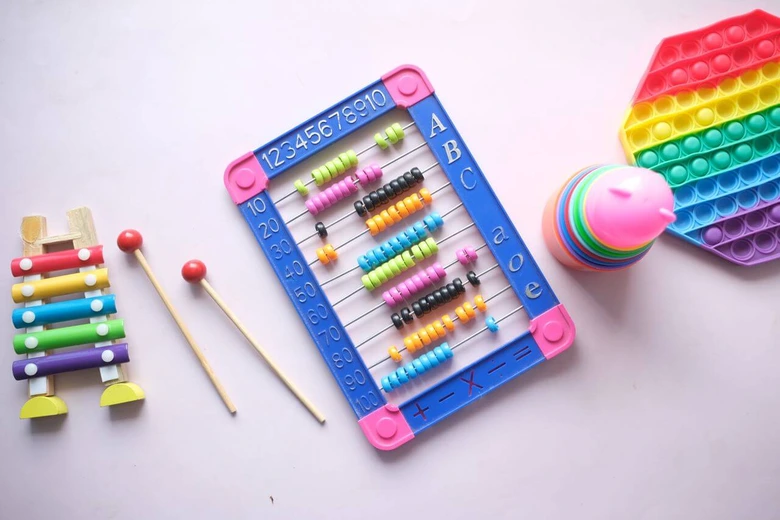
Understanding the Concept of Measurement Through Comparison of Sizes in the Surrounding Environment
Comparing tall and short bottles is one way to instill basic numeracy literacy in children.
Children learn new concepts through real-life experiences, such as when they compare the size of drinking bottles or measure their height with a toy ruler.
Involving children in various daily activities is the most effective way to sharpen their mathematical skills.
What is the Best Way to Stimulate Numeracy Skills Without Triggering Stress in Children?
The best way to stimulate children’s numeracy is to incorporate mathematical concepts into activities that are fun for them.
When the learning process is done without coercion, the child’s focus span will actually last much longer.
Integrating Counting Activities into the World of Play and Daily Routines
Moms can invite children to count the number of steps they take when climbing the stairs together.
Or, ask them for help calculating the number of spoons needed at the dinner table.
These activities do not require special tools. You just need full presence and a willingness to play with your child.
How Does Edumaster’s International and National Curriculum Personalize Children’s Mathematics Learning Methods?
Edumaster creates special learning modules that are tailored to the school curriculum and your child’s unique character.
This personal approach means that children who use the Cambridge or National curriculum can still learn comfortably.
Why Are Home Tutor Services the Best Solution for Maintaining Your Child’s Focus Span?
Early childhood has a very short focus span with an average duration of only 10–15 minutes for one activity.
In a busy tutoring environment, children are easily distracted and left behind without anyone paying attention.
With the teacher coming to the house, learning sessions can be adjusted to the child’s rhythm so they can be more relaxed, more flexible and more personal.
As a result, children are more comfortable and their absorption of the material is also much more optimal.
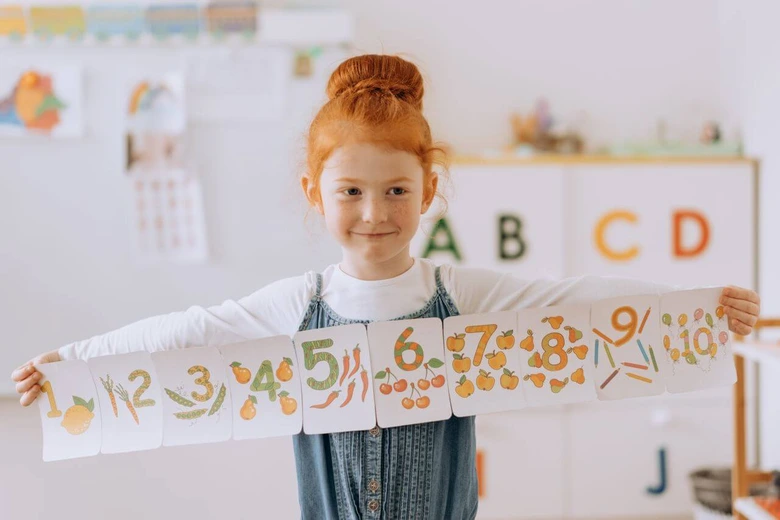
Is the Calistung Creative Edumaster Private Tutoring Program Available in Jabodetabek and Surabaya?
Yes, the Edumaster creative calistung private tutoring program is available in Jabodetabek (Jakarta, Bogor, Depok, Tangerang, Bekasi) and Surabaya.
This program is specifically designed for children aged 4–8 years with a fun play while learning approach.
The material includes introduction to numbers, basic counting, and pre-operational mathematics which is aligned with the kindergarten and early elementary school curriculum.
Light Case Study: Rafi, 5 Years from Bekasi
Mom Dini was worried because Rafi, her 5 year old son, always avoided being asked to count.
It turned out that Rafi was more responsive when learning using block toys rather than a number book.
After three weeks with the Edumaster teacher who used a Piagetian-style concrete approach, Rafi began to enthusiastically count the number of cars himself.
Not because I was forced to, but because learning felt like playing.
Frequently Asked Questions About Children’s Numeracy Ability
When is the ideal time to introduce mathematical concepts to children?
You can introduce it from the age of 1 year through songs, stories, and recognizing objects around the house.
Why does my child always get confused when writing the numbers 3 and E?
This is normal for young children because their spatial perception abilities are still developing.
Are private calistung lessons at Edumaster safe for kindergarten age children?
Very safe, because the method we use is play-based learning which is free from heavy academic pressure.
The stages of children’s numeracy skills start from concrete and sensory experiences, not from memorizing symbols.
Piaget’s theory reminds us that children need a long phase of playing with real objects before they are ready to enter mathematical abstractions.
Early childhood mathematics concepts include classification, geometry, and measurements that are not just a sequence of numbers 1 to 100.
The best stimulation is hidden in everyday routine and play.
Personalized learning methods, such as those applied by Edumaster tutors, really help children find their confidence in mathematics.
If Mom and Dad start to feel that support at home requires extra help, there’s no harm in seeking support.
Either through casual chats with fellow parents, reading more trusted sources, or consulting directly with the Edumaster team.
Every child has the right to feel that “I can do math” and sometimes, it just takes the right way, at the right time, by the right person.
Learn more about a personal approach to your child’s numeracy development through private calistung lessons.
The Edumaster education consultant team is ready to discuss via WhatsApp to help find the tutor that best suits your child’s character.

PakarPBN
A Private Blog Network (PBN) is a collection of websites that are controlled by a single individual or organization and used primarily to build backlinks to a “money site” in order to influence its ranking in search engines such as Google. The core idea behind a PBN is based on the importance of backlinks in Google’s ranking algorithm. Since Google views backlinks as signals of authority and trust, some website owners attempt to artificially create these signals through a controlled network of sites.
In a typical PBN setup, the owner acquires expired or aged domains that already have existing authority, backlinks, and history. These domains are rebuilt with new content and hosted separately, often using different IP addresses, hosting providers, themes, and ownership details to make them appear unrelated. Within the content published on these sites, links are strategically placed that point to the main website the owner wants to rank higher. By doing this, the owner attempts to pass link equity (also known as “link juice”) from the PBN sites to the target website.
The purpose of a PBN is to give the impression that the target website is naturally earning links from multiple independent sources. If done effectively, this can temporarily improve keyword rankings, increase organic visibility, and drive more traffic from search results.